WordPress Webhosting
Qualität für Ihren Erfolg
Mit einem Webhosting von webricks
ist es einfacher, als Sie denken.
Jetzt startenIndividuelle Betreuung
durch WordPress Experten
Wir verkaufen keine Verträge,
wir lösen Ihre Probleme

Wir  WordPress

Wir lieben WordPress und deshalb wollen wir das beste Hosting für WordPress Websites anbieten.
Nicht umsonst ist WordPress das beliebteste Content Management System:
Man kann damit tolle Websites und Online Shops gestalten, es ist einfach zu bedienen, sehr verlässlich und macht Spaß.
Und genau dies möchten wir Ihnen mit unserem Webhosting optimiert für WordPress auch bieten.
WordPress Webhosting vom Experten
Wir arbeiten seit vielen Jahren mit WordPress – sowohl als Hoster, Entwickler und als Webdesigner.
Wenn Sie sich für webricks entscheiden, profitieren Sie von unserer jahrelangen WordPress Expertise.
Unser Angebot ist speziell für WordPress optimiert, damit Sie das Maximum aus Ihrer Website herausholen können.
Außerdem legen wir ein besonderes Augenmerk auf individuellen Support – profitieren Sie von unserem Know-how.
Dabei bieten wir für alle Anwendungsfälle das richtige Paket:
Mit dem Hosting Paket Start erhalten Sie günstiges ein schnelles Hosting zu einem günstigen Preis.
Unser Paket Business bietet ein hervorragendes Preis Leistungsverhältnis und ist Ideal für Firmenwebsites.
Mit unserem rundum sorglos Paket Web Professional erhalten Sie ein Hosting für Ihre WordPress Webseite das keine Wünsche offenlässt.
Wenn Sie sich auf Ihre Inhalte konzentrieren und die laufende WordPress Wartung
nicht selbst durchführen möchten, bieten wir Ihnen günstige Wartungspakete.

PERFORMANCE

NVMe Festplatten für Ihr Hosting minimieren die Ladezeiten Ihrer Website. Das freut nicht nur Ihre Kunden, sondern auch Suchmaschinen.

BETREUUNG

WordPress Experten betreuen Sie individuell: Wir helfen Ihnen, Probleme zu lösen und das Beste aus Ihrer Website herauszuholen.

SICHERHEIT

Mit Web Application Firewall, täglichen Backups und ISO 27001 zertifiziertem Rechenzentrum ist Ihre Website rundum geschützt.
WordPress war noch nie so einfach!
Damit macht Onlinemarketing Spaß.

Performance
Schnelles Webhosting ist das Fundament einer performanten WordPress Website. Deshalb achten wir bei allen Details unserer WordPress Hosting Paketen auf optimale Geschwindigkeit:
Betreuung
Persönliche Betreuung ist für uns nicht nur ein Schlagwort, sondern Kern unserer Firmenphilosophie, denn nur mit einem guten Support können Sie das beste aus Ihrem Hosting machen:


Sicherheit
Angriffe verursachen nicht nur Kosten und viel Aufwand, sondern im schlimmsten Fall auch einen Reputationsverlust. Deshalb geben wir unser Bestes, um Ihre Website vor Angriffen zu schützen:
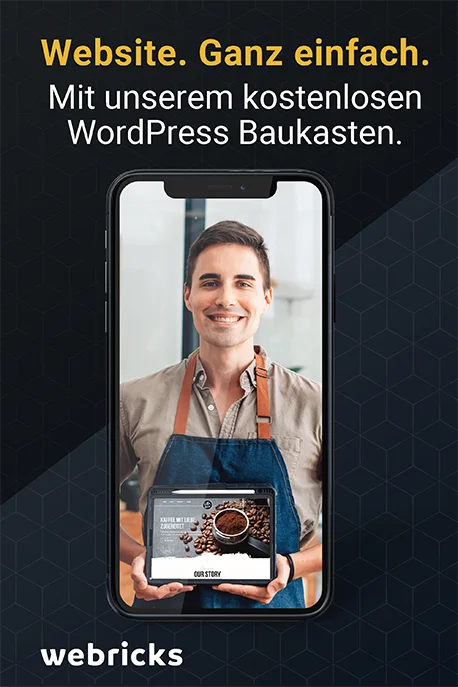
WordPress Website Baukasten
Träumen Sie von einer Website, die genauso einzigartig ist wie Ihr Business?
Mit dem kostenlosen Website Baukasten von webricks wird dieser Traum Wirklichkeit. Basierend auf der bewährten WordPress-Plattform, kombiniert der Intuitivität mit Flexibilität unsers Baukasten.
Gestalten Sie beeindruckende Webseiten ohne technische Hürden und tauchen Sie in eine Welt des digitalen Designs ein, die sich ganz an Ihren Wünschen orientiert.
Ihre Vorteile:
Kostenlos: Ohne versteckte Kosten können Sie sofort loslegen und Ihre Website zum Leben erwecken.
Benutzerfreundlich: Dank der intuitiven Oberfläche ist keine Vorkenntnis nötig – gestalten Sie mit Leichtigkeit.
Basierend auf WordPress: Profitieren Sie von der Flexibilität und Erweiterbarkeit der weltweit führenden Plattform.
Individuell gestaltbar: Passen Sie Ihre Website exakt an Ihre Vision und Marke an.
Zuverlässiger Support: Bei Fragen oder Problemen steht Ihnen unser webricks Team stets zur Seite.
WordPress Wartung
… ist jetzt so einfach wie noch nie!
Denn wir kümmern uns für Sie darum:
- Umgehende Installation sicherheitskritischer WordPress,
Plugin und Theme Updates, - Monatliche Installation funktioneller Updates,
- Manuelle Nachkontrolle der Seite nach Updates,
- Kostenlose Wiederherstellung falls Ihre Seite gehacked wurde.
Zusammen mit unserem Hosting erhalten Sie ein managed WordPress Hosting, das alle Extras bietet.
Sie können Sie voll und ganz auf die Inhalte konzentrieren und überlassen uns den Rest!



WordPress Webhosting Pakete
Start
€ 4,98
pro Monat exkl. USt.
25 GB NVMe Speicherplatz
Domain inkludiert
(.de, .at, .ch, .com, .net oder .org)
Unlimitierter Datenverkehr
Unlimitierte Anzahl an MySQL Datenbanken
PHP Version 8.2, 8.1, 8.0, 7.4
256MB PHP Memory limit
SSL Verschlüsselung
Staging Umgebung
Server Standort wählbar: Deutschland oder Österreich
100% Öko-Strom
5 GB E-Mail Speicherplatz
Unlimitierte Anzahl an E-Mail Adressen
Unlimitierte Anzahl an E-Mail Postfächern
Tägliches Backup
Premium E-Mail & Telefon Support
Keine Vertragsbindung!
Monatlich kündbar
Business
€ 14,98
pro Monat exkl. USt.
100 GB NVMe Speicherplatz
Domain inkludiert
(.de, .at, .ch, .com, .net oder .org)
Unlimitierter Datenverkehr
Unlimitierte Anzahl an MySQL Datenbanken
PHP Version 8.2, 8.1, 8.0, 7.4
512MB PHP Memory limit
SSH Zugriff
SSL Verschlüsselung
Staging Umgebung
Server Standort wählbar: Deutschland oder Österreich
100% Öko-Strom
10 GB E-Mail Speicherplatz
Unlimitierte Anzahl an E-Mail Adressen
Unlimitierte Anzahl an E-Mail Postfächern
Tägliches Backup
Premium E-Mail & Telefon Support
Keine Vertragsbindung!
Monatlich kündbar
Web Professional
€ 28,98
pro Monat exkl. USt.
500 GB NVMe Speicherplatz
Domain inkludiert
(.de, .at, .ch, .com, .net oder .org)
Unlimitierter Datenverkehr
Unlimitierte Anzahl an MySQL Datenbanken
PHP Version 8.2, 8.1, 8.0, 7.4
1024MB PHP Memory limit
SSH Zugriff
nginx-Caching für maximale Performance
SSL Verschlüsselung
Staging Umgebung
Server Standort wählbar: Deutschland oder Österreich
100% Öko-Strom
20 GB E-Mail Speicherplatz
Unlimitierte Anzahl an E-Mail Adressen
Unlimitierte Anzahl an E-Mail Postfächern
Tägliches Backup
Premium E-Mail & Telefon Support
Keine Vertragsbindung!
Monatlich kündbar
Das webricks Support-Versprechen
Kennen Sie das:
Haben Sie genug von diesen Sprüchen? Wir auch! Unserer Meinung nach hat der Support vieler Firmen in den letzten Jahren leider deutlich nachgelassen. Es wird immer schwieriger, überhaupt noch mit direkt mit einem Menschen zeitnah zu sprechen. Antworten auf einfache Fragen dauern Tage und oft wird man an nichtssagende Hilfe-Seiten verwiesen.
Das war einer der Gründe, warum wir überhaupt mit webricks einen weiteren Hosting-Service anbieten wollten.
Darum versprechen wir Ihnen: Wir sind für Sie da!
Wenn Sie unseren Support kontaktieren, sprechen Sie mit erfahrenen Technikern, die Expertise sowohl im Bereich der Serveradministration als auch im Bereich von WordPress haben. Und wir möchten uns um Ihr Problem kümmern!
Natürlich deckt unser Support die Hilfe bei allen technischen Problemen aufseiten der Server ab. Darüber hinaus umfasst unser Premium Support auch Folgendes:
Und wenn Sie sich bei einem Problem oder bei einer Frage unsicher sind, an wen Sie sich wenden können, fragen Sie uns! Selbst wenn wir Ihnen bei einem Problem nicht direkt helfen können, weisen gerne den Weg!
Wir freuen uns auf Sie!

WordPress Hosting mit NVMe SSD Festplatten
Was ist eine NVMe SSD?
Bei einer NVMe SSD handelt es sich um eine spezielle Klasse von Festplatten. Diese basieren auf Solid State Disks (SSD), sind aber direkt über den PCI-Express Bus besonders schnell an das System angebunden. Der Geschwindigkeitsvorteil gegenüber herkömmlichen Festplatten, die via SATA oder SAS angebunden sind, ist beachtlich:
Datendurchsatz: Während SSD Festplatten maximal 550 MB/s erreichen können, erreichen NVMe Festplatten spielend leicht einen Durchsatz von 3.000 MB/s bis 7.000 MB/s.
IOPS (Input/Output Operations per Second): Während herkömmliche SSDs 100.000 bis 400.000 IOPS erreichen, können NVMe SSDs 200.000 bis 10.000.000 IOPS erreichen.

Wie profitiert eine WordPress Website von NVMe SSD Festplatten?
WordPress Websites bestehen unter anderem aus den Dateien mit dem Programmiercode (PHP), den Code für Semantik und Darstellung (HTML, CSS und Javascript), Bildern und anderen Medien. Die WordPress Standardinstallation allein besteht aus über 3.200 Dateien. Wird die Website nun abgerufen, müssen viele dieser Dateien sehr schnell geladen und verarbeitet werden, damit die Website nicht zu lange zum Laden benötigt.
Da NVMe SSDs einen sehr hohen Datendurchsatz bieten und außerdem besonders auf möglichst viele Dateioperationen pro Sekunde optimiert sind, können sie gerade hier ihre Vorteile besonders gut ausspielen und die Ladezeit deutlich optimieren.
Wie groß sind die Vorteile von WordPress Hosting mit NVMe Festplatten?
Durch die hohe Performance kann sich die Ladezeit am Server (TTFB – Time to first byte) um bis zu 200 % reduzieren.
Die Gesamtladezeit von WordPress Websites lies sich in unseren Tests damit um bis zu 3 Sekunden reduzieren.
Dabei haben schon viele Studien gezeigt, dass eine schnellere Ladezeit zu einer höheren Conversion rate führt und damit den Umsatz steigert und die Bounce Rate stark reduziert. Außerdem ist die Ladezeit für die Suchmaschinenoptimierung mittlerweile essenziell und hat einen direkten Einfluss auf das Ranking. Die Ladezeit am Server (TTFB) sollte dabei zwischen 200-500 ms liegen, alles darüber wird weder von Google noch von den Besuchern akzeptiert.
Haben wir Ihr Interesse geweckt?
Wenn Sie Interesse an blitzschnellen WordPress Hosting haben, nutzen Sie doch unseren gratis Test! Überzeugen Sie sich ohne Risiko, welche Ladezeit Ihre WordPress Website mit NVMe Festplatten erreichen kann. Sollten Sie Fragen dazu haben oder eine individuelle Beratung wünschen, würden wir uns freuen, wenn Sie uns kontaktieren!